
What Really Makes Kids Happy? New Research Offers a Surprising Answer
Share
New research suggests that children's happiness is about more than getting what they want. Even young children understand the satisfaction that comes from working toward something meaningful.
Ask a parent what they want most for their child, and there's a good chance the answer will be simple: “I just want my child to be happy.”
It's a wonderful wish. But what does happiness actually mean to a child?
Is it getting another toy? Staying up a little later? Having ice cream before dinner? Or is there something deeper behind the smiles, laughter, and excitement of childhood?
A new study published in September 2026 suggests that children may understand happiness in a more sophisticated way than adults sometimes realize.
Researchers found that even children as young as four recognize that achieving a meaningful goal can bring happiness, even when doing so means passing up something they would enjoy right now.
For parents, that's an encouraging discovery. It suggests that helping children build confidence, make choices, and experience small accomplishments may be just as important as providing fun and entertainment.
What the New Research Discovered
The study, published in the journal Child Development, was conducted by researchers Lingyan Hu, Douglas A. Frye, and Fan Yang.
Across three preregistered studies involving 307 children in the United States, ages four through nine, researchers explored how children think about happiness when personal goals conflict with immediate preferences.
Imagine a child who loves sweets but also wants to make a healthier food choice.
Which experience would make the child happier: choosing something enjoyable in the moment or making a decision that supports a personal goal?
The researchers found that children didn't simply assume happiness always comes from satisfying an immediate preference. They also considered the importance of accomplishing a goal.
Children showed an appreciation for goal-oriented ideas about happiness, and their responses were associated with healthier choices in the study's decision-making tasks.
The findings challenge the assumption that young children think happiness is only about pleasure, treats, and getting their own way.
Even at a young age, children appear capable of recognizing the satisfaction that comes from doing something meaningful.
That's not the same as saying children should always choose responsibility over fun. It means their understanding of happiness may be richer than we give them credit for.
Happiness Isn't the Same as Getting Everything You Want
Every parent has experienced a moment when a child desperately wants something.
Maybe it's a toy at the store, another episode of a favorite show, or a cookie just before dinner.
When the answer is no, disappointment can arrive quickly.
It's tempting to think that giving children what they want is the easiest way to make them happy. Sometimes a little treat or surprise really does brighten their day.
But there's an important difference between feeling happy in a particular moment and developing a lasting sense of satisfaction.
A child who finally learns to ride a bicycle may feel proud in a way that a new toy cannot quite reproduce.
A child who finishes a difficult puzzle may experience the pleasure of figuring something out independently.
And a child who works hard to learn a song may discover that the practice itself makes the accomplishment more meaningful.
These everyday experiences don't guarantee happiness. But they offer opportunities for children to discover that effort, progress, and personal achievement can feel rewarding.
Seven Simple Ways to Support Children's Happiness
The new research isn't a tested seven-step parenting program. But its findings offer a useful starting point for thinking about how parents can support meaningful, satisfying experiences in everyday family life.
1. Let Children Experience Small Accomplishments
Children don't need extraordinary achievements to feel proud.
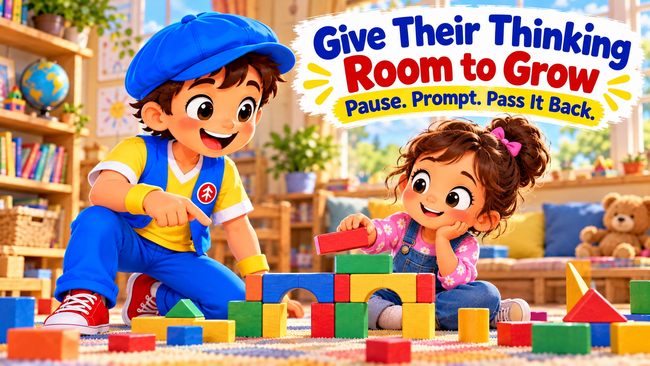
Buttoning a coat, building a block tower, learning a new word, or helping prepare breakfast can all provide a sense of accomplishment.
Give your child opportunities to try manageable tasks independently, even when doing everything yourself would be faster.
Instead of immediately stepping in, try asking:
“Would you like to give it another try?”
When children accomplish something themselves, they have an opportunity to recognize their growing abilities.
2. Celebrate Progress, Not Just Results
Not every effort ends in success.
A block tower falls. A drawing doesn't turn out as expected. A new skill takes longer to learn than anticipated.
Those moments are part of childhood, too.
Rather than praising only the finished result, notice the process.
“You kept trying different ways to make that work.”
“I noticed how carefully you practiced.”
“You found a new way to solve that problem.”
This kind of encouragement helps children recognize their effort without making every activity feel like a competition.
3. Give Kids Meaningful Choices
Children spend much of their day following instructions.
Giving them reasonable, age-appropriate choices can help them feel more involved in their own lives.
A preschooler might choose which book to read before bed.
An older child might decide whether to practice a new skill before or after an afternoon snack.
The choices don't need to be enormous. What's important is allowing children some ownership of decisions that affect them.
Of course, adults still provide boundaries, especially around safety, health, and family responsibilities.
4. Make Room for Imagination and Child-Led Play
There's another interesting piece of research worth considering.
An April 2026 study led by researchers at the University of Sydney examined information from 1,426 Australian children.
The researchers found that stronger pretend-play abilities at ages two and three were associated with fewer emotional and behavioral difficulties later in childhood, including at ages four to five and six to seven.
The study doesn't prove that pretend play prevents mental health difficulties. However, it adds to evidence that imaginative experiences deserve a meaningful place in early childhood.
And imaginative play doesn't require expensive equipment.
A cardboard box can become a spaceship. A blanket can become a castle. A stuffed animal can become the patient in a pretend doctor's office.
Sometimes the most helpful thing a parent can do is let the child decide what happens next.
For more ideas, read our related Storybooksong article: No Plan, Just Play! Why Kids Need Time to Lead.
5. Help Children Discover What Matters to Them
Every child is different.
One child may love building things. Another may enjoy music, drawing, gardening, sports, or caring for animals.
Pay attention to the activities that spark genuine curiosity.
Ask questions such as:
“What would you like to learn how to do?”
“What was your favorite part of making that?”
“Is there something you'd like to try next?”
The goal isn't to turn every interest into a lesson or achievement. It's to help children recognize what they enjoy, what they care about, and what they might like to explore.
6. Allow Disappointment Without Rushing to Fix It
A happy childhood doesn't mean a childhood without sadness, frustration, or disappointment.
Children need room to experience a full range of emotions.
When something doesn't go their way, acknowledging their feelings can be more helpful than immediately trying to make the unpleasant emotion disappear.
“You really wanted that, and you're disappointed.”
“I know it's frustrating when something doesn't work.”
“It's okay to feel upset. I'm here with you.”
Once a child feels heard, you can help them decide what to do next.
Happiness isn't about never feeling bad. Learning that difficult feelings can be understood and managed is an important part of growing up.
7. Remember That Ordinary Moments Count
It's easy to imagine that childhood happiness requires elaborate vacations, expensive experiences, or a calendar filled with exciting activities.
But some of the most meaningful experiences happen during ordinary days.
Cooking together. Singing a favorite song. Taking a walk. Sharing a joke. Completing a puzzle. Trying something new.
A child doesn't need every moment to be exciting.
Sometimes, the chance to participate, explore, contribute, and enjoy being together is enough to make an ordinary day feel special.
What About Love, Security, and Family Relationships?
Meaningful goals are only one part of the picture.
A separate research review published in Pediatrics in 2026 examined frameworks for understanding how young children flourish.
It identified important dimensions of wellbeing that include safety and security, love and connection, play, curiosity, and healthy development.
This helps put the new happiness research into perspective.
Children benefit from opportunities to accomplish things, but they also need supportive relationships and environments where they feel safe.
And parents don't have to create perfect conditions every day.
The bigger picture is about providing care, encouragement, appropriate boundaries, and opportunities for children to grow.
What the Research Doesn't Tell Us
It's worth keeping the findings in perspective.
The Child Development study examined how 307 children reasoned about happiness in particular situations. It did not follow children for years to determine which parenting practices produce happier adults.
It also doesn't mean that children who prefer immediate rewards are unhappy, or that parents should pressure children to achieve more.
Similarly, the Australian pretend-play study found an association with later emotional and behavioral outcomes, not proof of cause and effect.
These findings offer useful insights, but they aren't a formula for measuring or guaranteeing happiness.
And that's an important distinction: children deserve opportunities to enjoy life without feeling that every activity must make them more successful, productive, or emotionally resilient.
The Good News for Parents
Perhaps the most encouraging message from the new research is that children may already understand something adults sometimes forget.
Happiness isn't always about getting more.
Sometimes it's about learning something new, reaching a goal, making a choice, or discovering what we're capable of doing.
For parents, that means supporting happiness doesn't have to involve constant entertainment or expensive surprises.
It can begin with a little patience, encouragement, room to explore, and the freedom to experience the satisfaction of doing something independently.
A happy childhood isn't about making every moment perfect. It's about giving children opportunities to feel loved, curious, capable, and connected as they grow.
And that's good news worth sharing.
Research and Sources
- Hu, L., Frye, D. A., & Yang, F. (2026). Finding happiness: Young children recognize that goals shape happiness in the face of simple preferences. Child Development.
- Vasilopoulos, F., and colleagues (2026). Longitudinal Evidence of the Relationship Between Pretend Play and Mental Health in the Early Years. Early Childhood Education Journal.
- Davis, J. A., and colleagues (2026). Flourishing Childhood Frameworks: A Scoping Review. Pediatrics.